Commercial building demolition typically costs between $4 and $8 per square foot, though complex projects requiring extensive hazardous material removal can reach $25 per square foot. The process involves structural assessments, permit acquisition, site preparation, and the safe removal of debris or toxic materials. Successful projects require careful coordination of environmental regulations and safety protocols to ensure the site is ready for new development.
Taking down a commercial property in the Coachella Valley is a high-stakes operation where a single oversight can derail your entire development timeline. You are likely staring at a complex site in Palm Desert or Indio, wondering how to balance rising disposal fees with strict environmental regulations. It is not just about the wrecking ball; it is about mitigating risk and protecting your bottom line. In this guide, we break down the financial drivers of demolition costs and the critical differences between total and selective teardowns. We will also navigate the nuances of SCAQMD compliance and local permitting requirements to ensure your site is cleared safely and legally. By the end, you will have a practical roadmap for managing site logistics and moving your project toward construction without experiencing costly setbacks or regulatory friction.
The Cost of Commercial Building Demolition in Palm Desert and Beyond
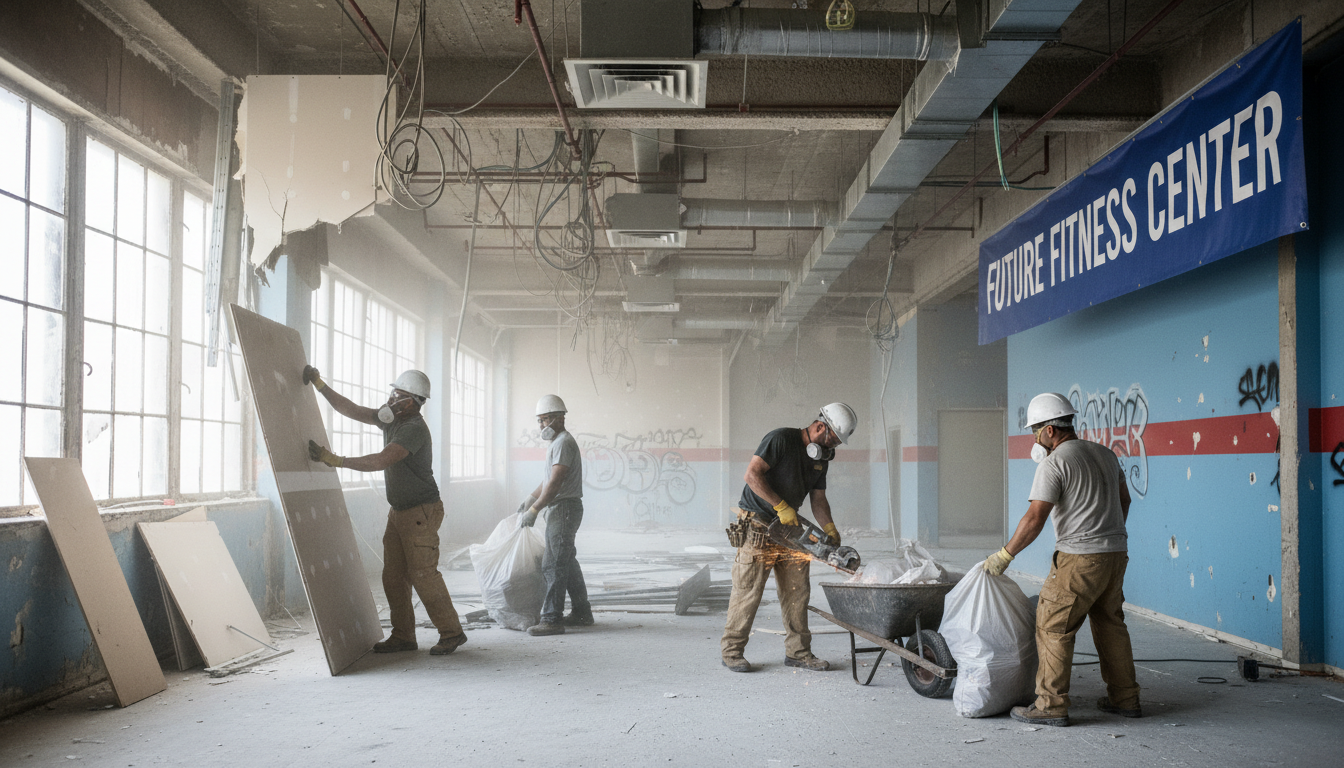
Projecting the budget for a commercial building demolition in the Coachella Valley requires an understanding of the regional regulatory landscape. While national data often cites an average of $4 to $8 per square foot for commercial teardowns, those figures rarely reflect the realities of the California market. In Palm Desert and surrounding Riverside County cities, developers should expect costs to range from $8 to $25 per square foot.
Several factors unique to California drive this pricing gap. State specific labor laws and prevailing wage requirements set a higher baseline for skilled crews. Furthermore, strict environmental standards regarding the sorting and diversion of materials from landfills necessitate intensive construction debris hauling logistics. The state mandate for high diversion rates means that simple disposal is replaced by complex material separation at the source.
Specific project variables, known as cost drivers, will determine where a project falls on that price spectrum.
Cost Driver | Influence on Pricing |
|---|---|
Structure Height | Multi story buildings require specialized high reach equipment and enhanced safety protocols. |
Material Type | Reinforced concrete typically costs more to dismantle and process than steel frames. |
Proximity | High density areas demand vibration monitoring and noise mitigation to protect adjacent active businesses. |
Access | Restricted sites that prevent large excavators from maneuvering increase the reliance on manual labor. |
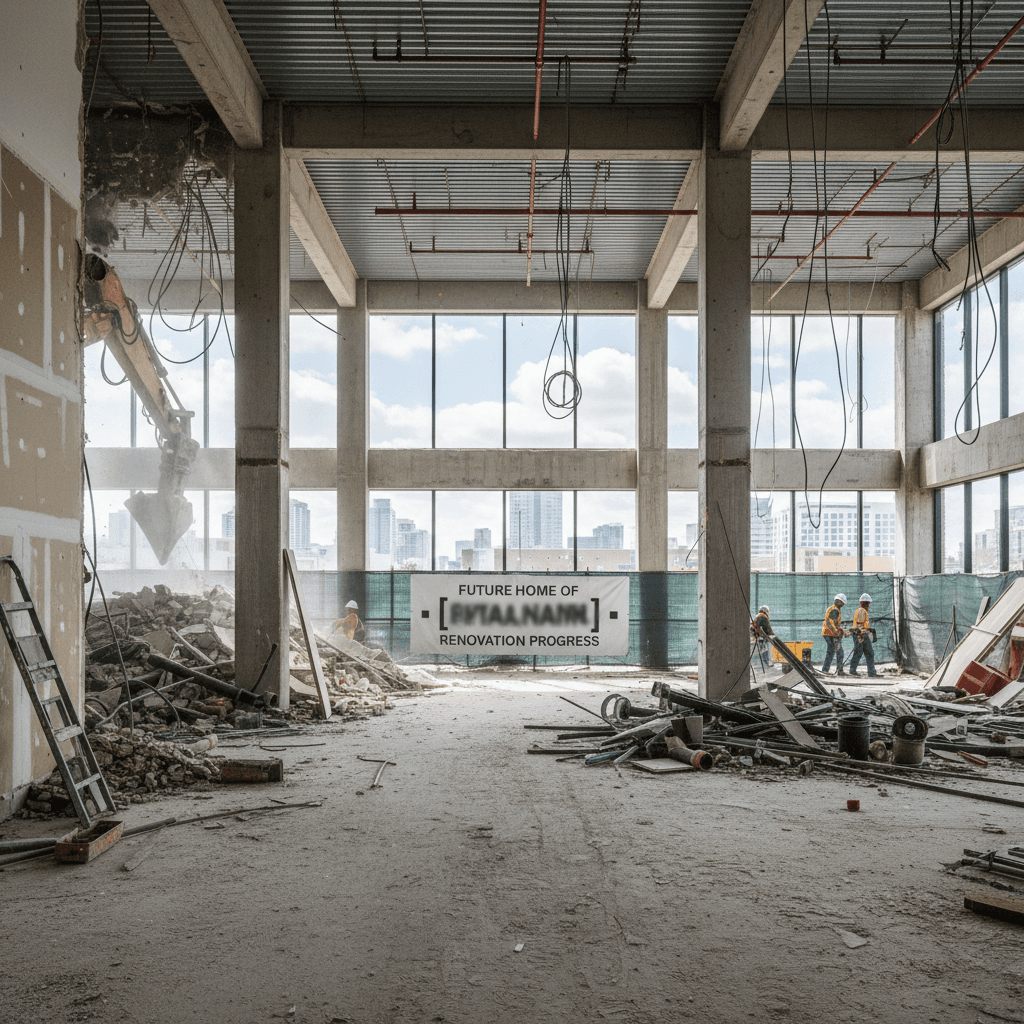
While structural exterior demolition involves heavy machinery for a total knockdown, many local projects focus on commercial interior demolition. This selective approach generally carries a lower price tag per square foot than a full teardown because the primary building shell remains intact. However, it requires significantly more precision. Crews must surgically remove mechanical, electrical, and plumbing systems without compromising the primary building frame or impacting neighboring tenants. Effective concrete demolition services are often required for both types of work, particularly when removing foundational slabs or trenching for new utility lines during a site remodel.
Calculating Your Demolition Budget: What Drives the Price Up?
Moving beyond square footage estimates requires a deep dive into site specific variables that can cause a budget to fluctuate. One of the most significant impacts on a commercial building demolition quote in the Coachella Valley is hazardous material abatement. Many older retail centers and mid century structures in Palm Desert contain asbestos in floor tiles, roofing, or insulation, along with lead based paint. Identifying these materials during the pre-construction phase is vital; failure to do so can halt a project and trigger heavy fines from Riverside County health departments.
Logistics also play a major role. If the project site offers limited clearance for heavy excavators and loaders, the pace of work slows, increasing total labor hours. Furthermore, all active utilities must be professionally capped at the street or meter before any structural work begins. This requires coordination with local utility providers like the Imperial Irrigation District (IID) or Coachella Valley Water District (CVWD) to ensure the site is safe for mechanical demolition.
The geographic location of your project relative to disposal sites heavily influences construction debris hauling expenses. Because California law mandates high diversion rates, materials like concrete and steel must be transported to specialized recycling facilities rather than general landfills. The further your site is from these Riverside County processing hubs, the higher the fuel and trucking costs will climb.
Use the following checklist to ensure your bids are comprehensive and comparable:
Bid Component | Requirement |
|---|---|
Utility Capping | Confirmation of coordination with IID, CVWD, and gas providers. |
Hazardous Survey | Inclusion of certified asbestos and lead inspections. |
Permit Fees | Clear breakdown of Palm Desert municipal permit costs. |
Hauling Logistics | Specification of expected recycling vs. landfill tonnage. |
Dust Mitigation | Cost for water trucks and mandatory track-out prevention measures. |
The 5 Stage Commercial Demolition Process
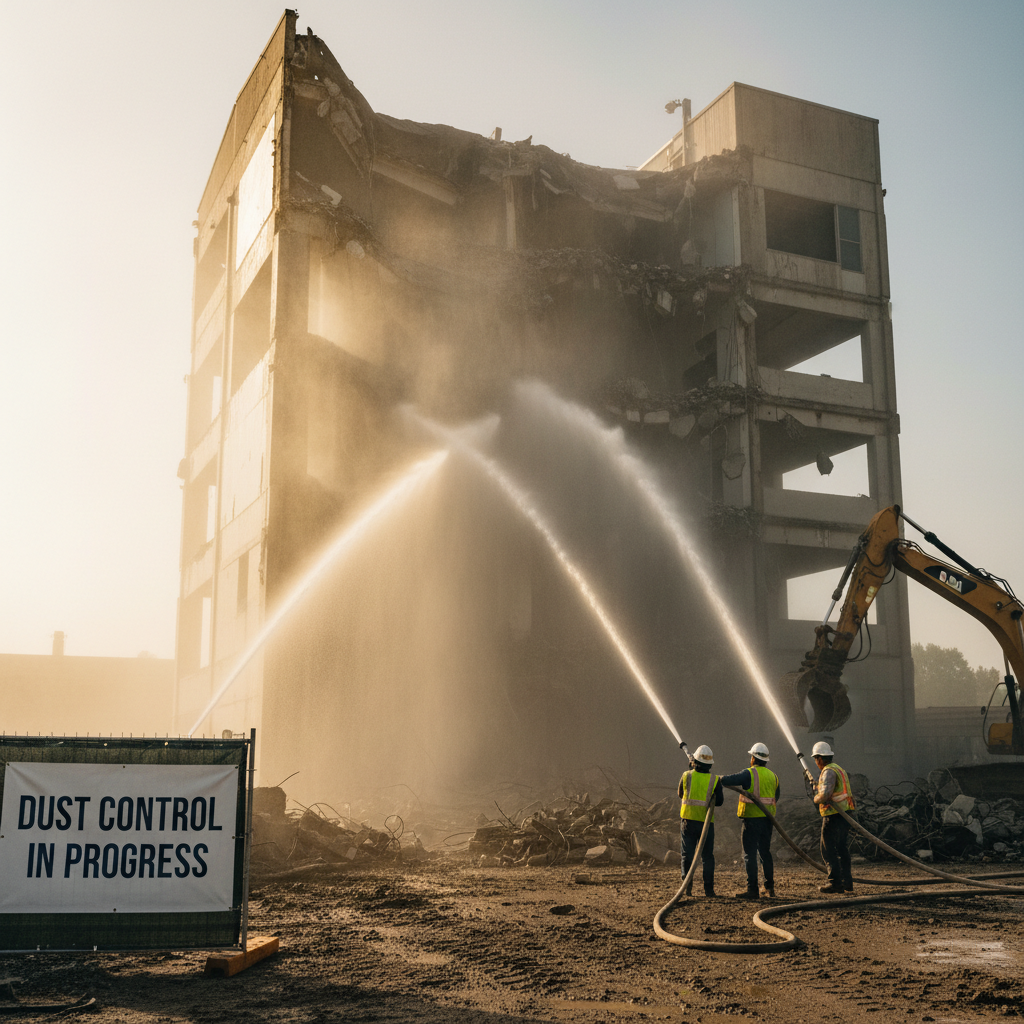
A systematic approach ensures that commercial building demolition remains predictable, safe, and compliant with Coachella Valley standards. Demo Demo Demo divides the project lifecycle into five distinct stages, each designed to mitigate risk and keep the redevelopment schedule on track.
Stage 1: Pre-demolition Survey and Engineering The most critical phase occurs before a single machine arrives on site. Our engineering team conducts a thorough survey of the structure to determine its stability, the location of load-bearing elements, and the potential impact on adjacent properties. Skipping or rushing this stage is the primary cause of unexpected project delays. Identifying structural vulnerabilities early prevents uncontrolled collapses and ensures the safety of the crew while they work in or around the structure.
Stage 2: Permitting and Regulatory Compliance Navigating Palm Desert municipal codes requires meticulous documentation. This stage involves securing all necessary demolition permits and ensuring the project meets local zoning requirements. We coordinate with the city to verify that all environmental and safety protocols are satisfied before the physical work begins, preventing costly work-stop orders.
Stage 3: Hazardous Material Removal Safety standards dictate that any identified asbestos, lead, or other toxins must be remediated. This phase is completed by certified specialists who isolate the work zone to prevent cross-contamination. Removing these materials at this stage ensures that the subsequent construction debris hauling process handles only clean, non-hazardous waste, which is essential for meeting California diversion mandates.
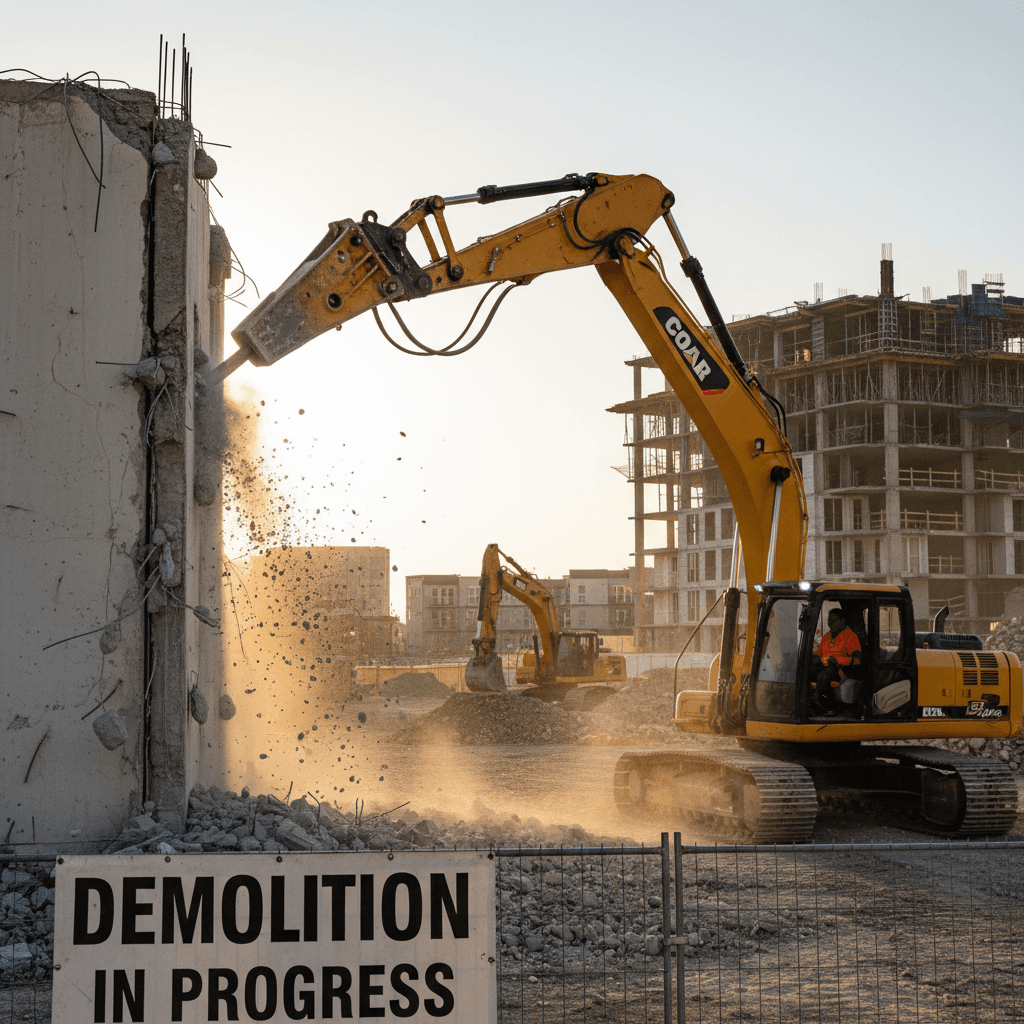
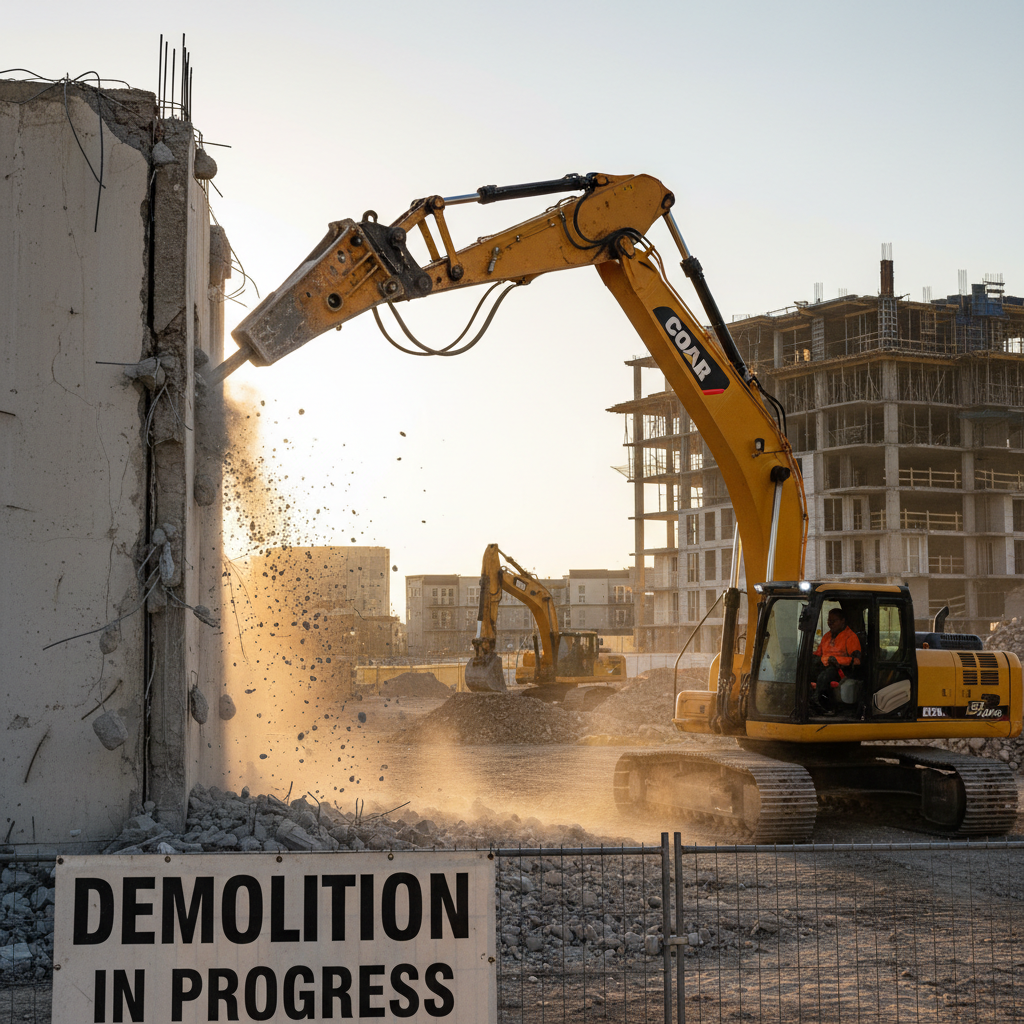
Stage 4: The Actual Demolition The physical teardown is executed through either mechanical or manual methods. For structural exterior demolition, we utilize excavators and specialized attachments to dismantle the building systematically from the top down. Conversely, commercial interior demolition often relies on manual labor and smaller equipment to preserve the building envelope while stripping out internal systems and non-load-bearing partitions.
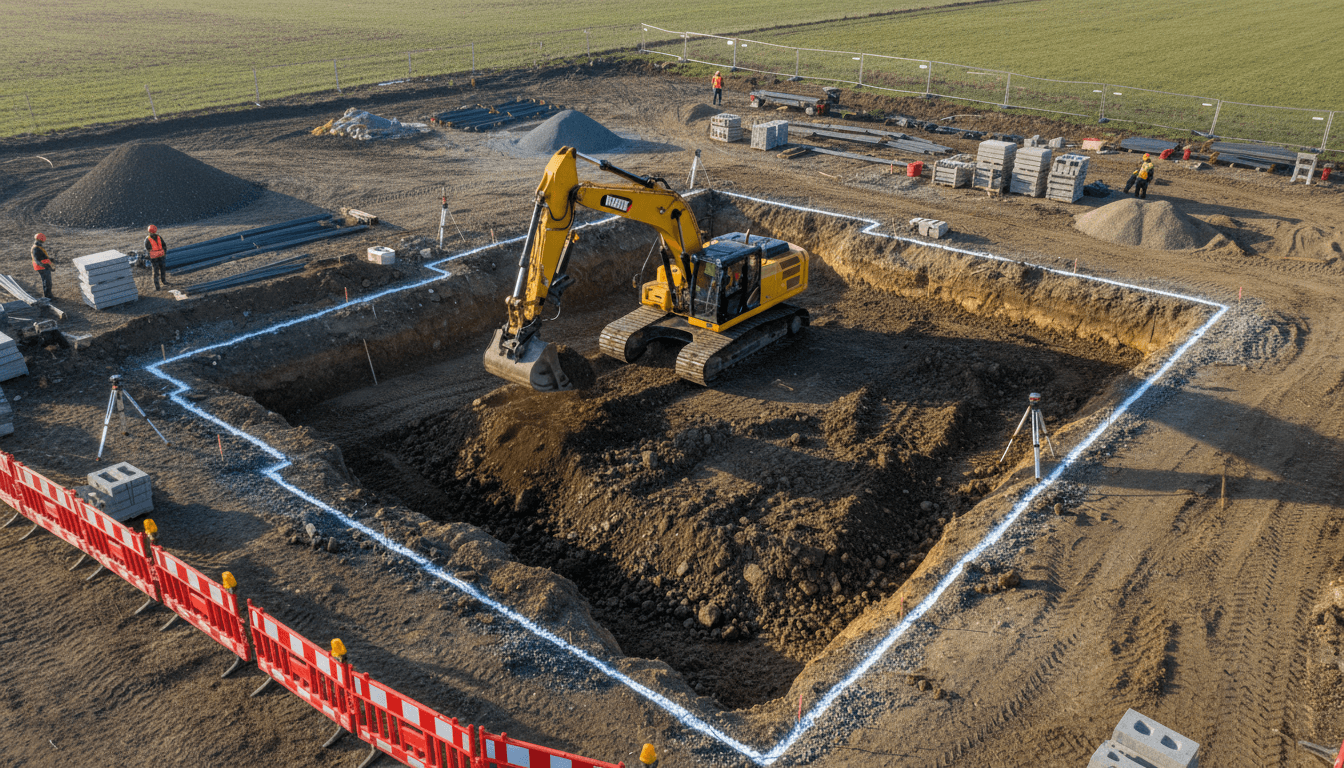
Stage 5: Site Cleanup and Soil Stabilization Once the structure is down, the focus shifts to the ground. This involves concrete demolition services to remove foundations, footings, and underground slabs. We then sort all remaining materials for recycling or disposal. The final step is soil stabilization and grading, ensuring the lot is a safe, level, and build-ready pad for the next phase of development.
Total vs. Selective Commercial Demolition: Which Do You Need?
Determining the scope of a commercial building demolition project depends entirely on the long term goals for the property. In the Coachella Valley, we frequently encounter two distinct requirements: the surgical precision of a partial strip-out or the brute force of a full site clearance.
Commercial interior demolition serves as the primary choice for property owners updating retail spaces, malls, or office complexes where the exterior envelope must remain intact. This process involves the strategic removal of non-essential partitions, flooring, and outdated MEP (mechanical, electrical, and plumbing) systems. Our teams focus on exposing the underlying structural elements, which allows architects and engineers to inspect the building frame without causing any compromise to the primary load bearing components. This method is particularly effective for adaptive reuse projects where the aesthetic value resides in the facade.
Alternatively, total structural exterior demolition is utilized when a building has reached the end of its functional life or when the site is designated for complete redevelopment. This involves the systematic dismantling of the entire structure, from the roof down to the foundation.
Aspect | Selective Demolition | Total Demolition |
|---|---|---|
Primary Goal | Renovation or floor plan update | Complete site redevelopment |
Structural Impact | Maintains building shell and facade | Full removal of all elements |
Equipment Type | Smaller loaders, hand tools, robotic breakers | High reach excavators, hydraulic shears |
Waste Profile | High percentage of drywall and MEP systems | High volume of concrete and steel |
At Demo Demo Demo, we manage the transition for both scales. Our crews ensure that construction debris hauling is optimized for the specific waste stream of each method, ensuring that recyclable metals from interior systems or concrete from total teardowns reach the appropriate Riverside County facilities. Whether the project requires the delicate removal of a single office floor or the total clearing of a retail plaza, we maintain the structural integrity of the surrounding environment while preparing the site for its next phase.
Navigating Local Regulations: SCAQMD and Coachella Valley Permits
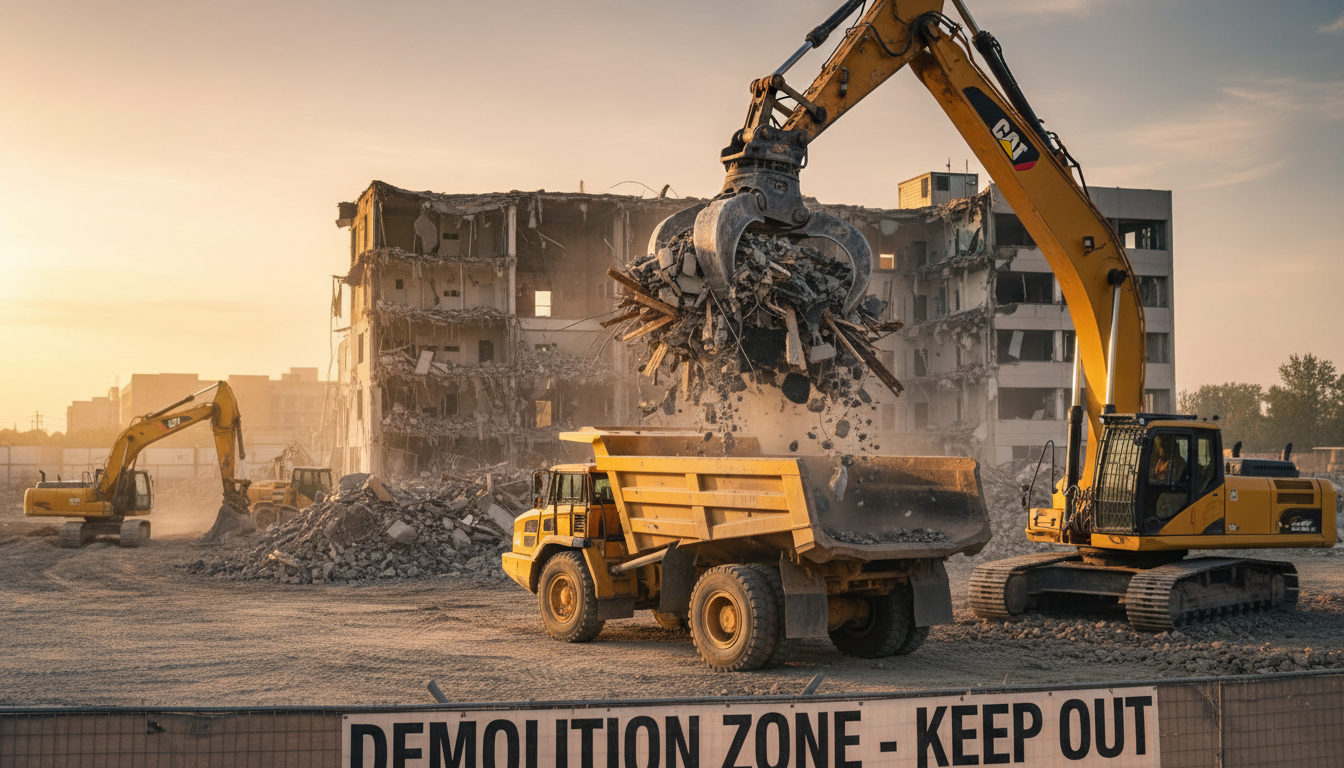
Preparing a site for its next phase involves more than just physical labor; it requires strict adherence to regional environmental mandates. In the Coachella Valley, the South Coast Air Quality Management District (SCAQMD) oversees air quality through Rule 403 and the desert specific Rule 403.1. These regulations are designed to minimize fugitive dust, which is a significant concern during any commercial building demolition project due to our high wind environment.
Before work begins, property owners must have an approved Dust Control Plan (DCP) in place. This document is not a mere formality; it specifies exactly how the crew will mitigate airborne particles. Common requirements include the continuous use of water trucks, the installation of wind fencing, and the implementation of stabilized construction entrances to prevent sediment from reaching public roads. Failure to maintain these standards can result in immediate stop work orders and substantial daily fines from the SCAQMD.
Navigating the Palm Desert Building and Safety Department adds another layer to the timeline. A demolition permit requires proof of a cleared asbestos survey and a waste management plan that aligns with California’s diversion requirements for construction debris hauling. Typically, you should allow at least 10 to 14 business days for the municipal review process. Securing these approvals early ensures that the transition from structural exterior demolition to a clean site remains on schedule and fully compliant with local law.
Site Cleanup and Post Demolition Logistics
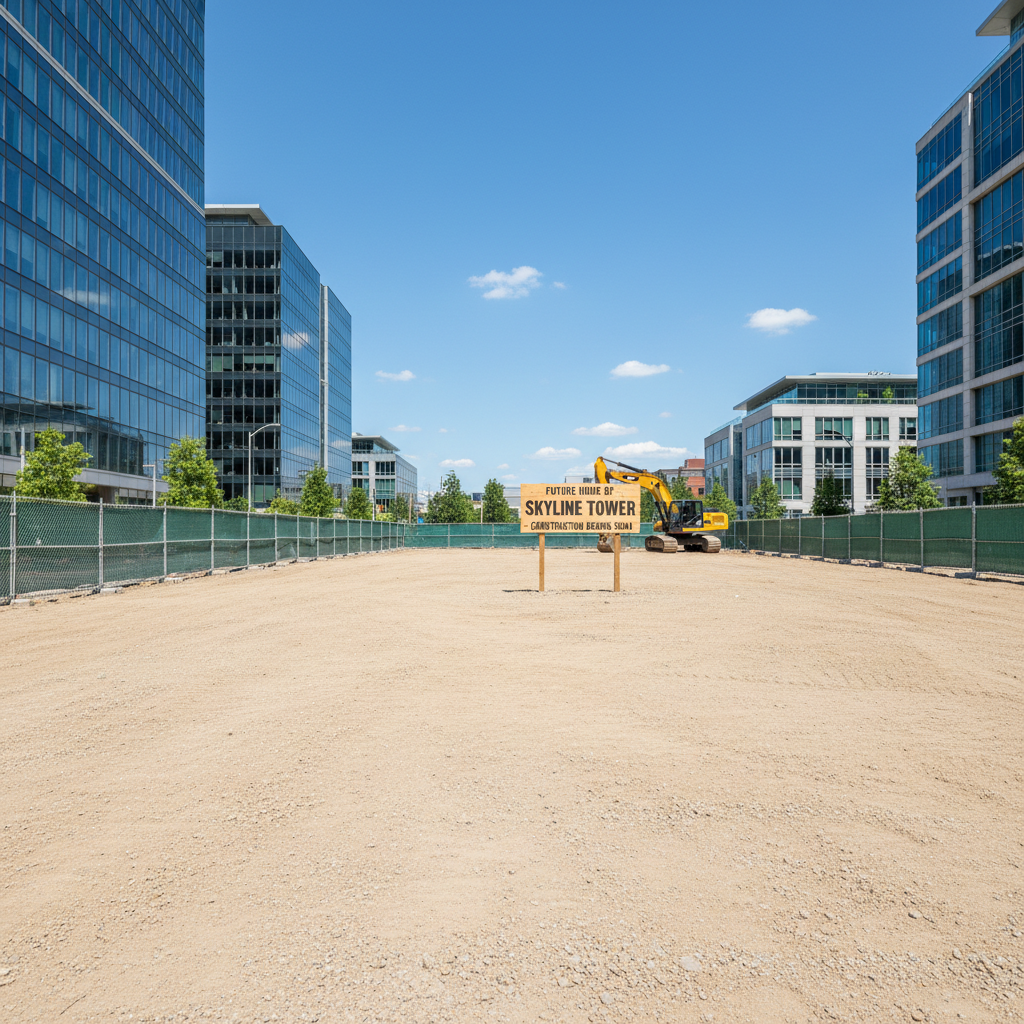
Once the vertical structure is removed, the focus shifts to the subterranean elements. Our concrete demolition services address the slabs, footers, and grade beams that remain below the surface. In the Coachella Valley, we prioritize the systematic separation of materials to maximize recycling rates. By processing clean concrete into crushed aggregate, we can often repurpose the material as a stabilized base for future parking lots or foundation pads, which significantly reduces the volume and expense of construction debris hauling.
A successful commercial building demolition ends with a site that is ready for immediate vertical construction. This phase requires more than just a cleared surface; it involves the total extraction of utility stubs, abandoned irrigation lines, and any remaining organic debris. The lot is then graded to professional standards, ensuring a level, stabilized pad that meets the specific compaction requirements of the project engineers.
Demo Demo Demo manages the entire transition from a standing structure to a build-ready lot. We provide all necessary manifest records for diverted materials to ensure municipal compliance and finalize the site for the next developer. Our goal is to hand back a property where the only remaining task is for the new construction crew to break ground.
Navigating a commercial demolition project in the Coachella Valley involves careful coordination between budgeting, safety protocols, and local permits. While understanding these phases is the first step toward a successful build, managing the entire process requires significant oversight. If you want expert help to ensure your project stays on track and follows all regional guidelines, Demo Demo Demo is ready to assist. You can explore our comprehensive Services to see how we manage every detail. Our team provides the precision and reliability needed to clear the way for your next big venture.