Commercial building demolition contractors facilitate the structural removal process through meticulous site inspections, hazard assessments, and permit acquisition. Costs for these services generally range from $4 to $8 per square foot, though expenses can rise to $30 per square foot depending on the building size, location, and the presence of hazardous materials. Effective planning focuses on safety protocols and efficient waste management to prepare the site for future development.
Tearing down a commercial structure in the Coachella Valley involves far more than just swinging a wrecking ball. Property owners often face the daunting reality of unforeseen environmental liabilities, strict dust control mandates, and fluctuating permit timelines that can derail a project budget before the first wall falls. Partnering with the right commercial building demolition contractors is the difference between a seamless site transition and a legal or financial nightmare. In a region where urban density meets sensitive desert ecosystems, precise planning is your only safeguard against costly delays. This guide breaks down the essential variables of commercial demolition, from California's average cost per square foot to the critical phases of site clearing. You will learn how to navigate local regulations, manage environmental compliance, and select a team capable of handling the unique logistical demands of the Palm Desert landscape.
Understanding the Scope of Commercial Demolition in Palm Desert
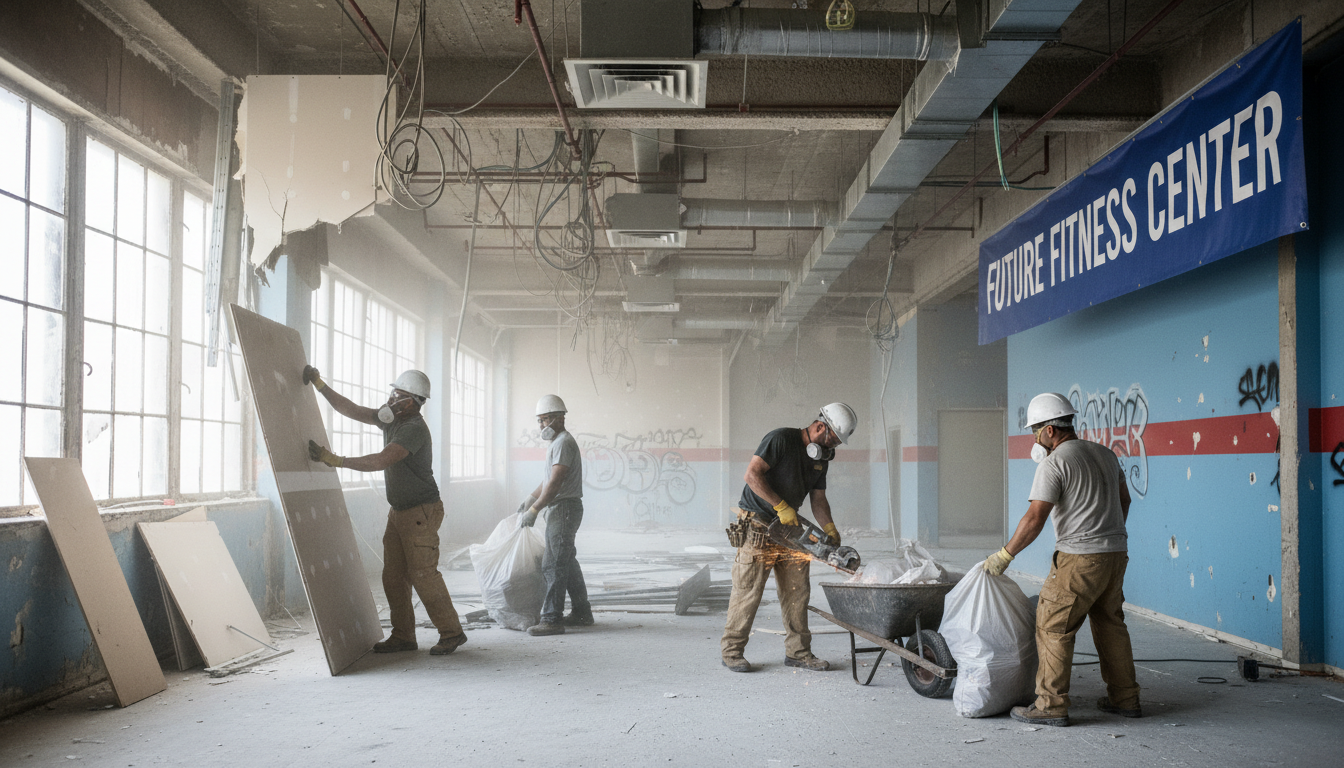
Executing a commercial demolition project in the Coachella Valley requires more than heavy machinery; it demands an understanding of the desert's specific environmental and regulatory landscape. Projects across the valley range from full scale clearing of retail strip malls in Palm Desert to high precision hospitality renovations in La Quinta resort corridors. Each environment presents unique challenges, from managing extreme heat exposure for crews to mitigating windblown dust during high-velocity events.
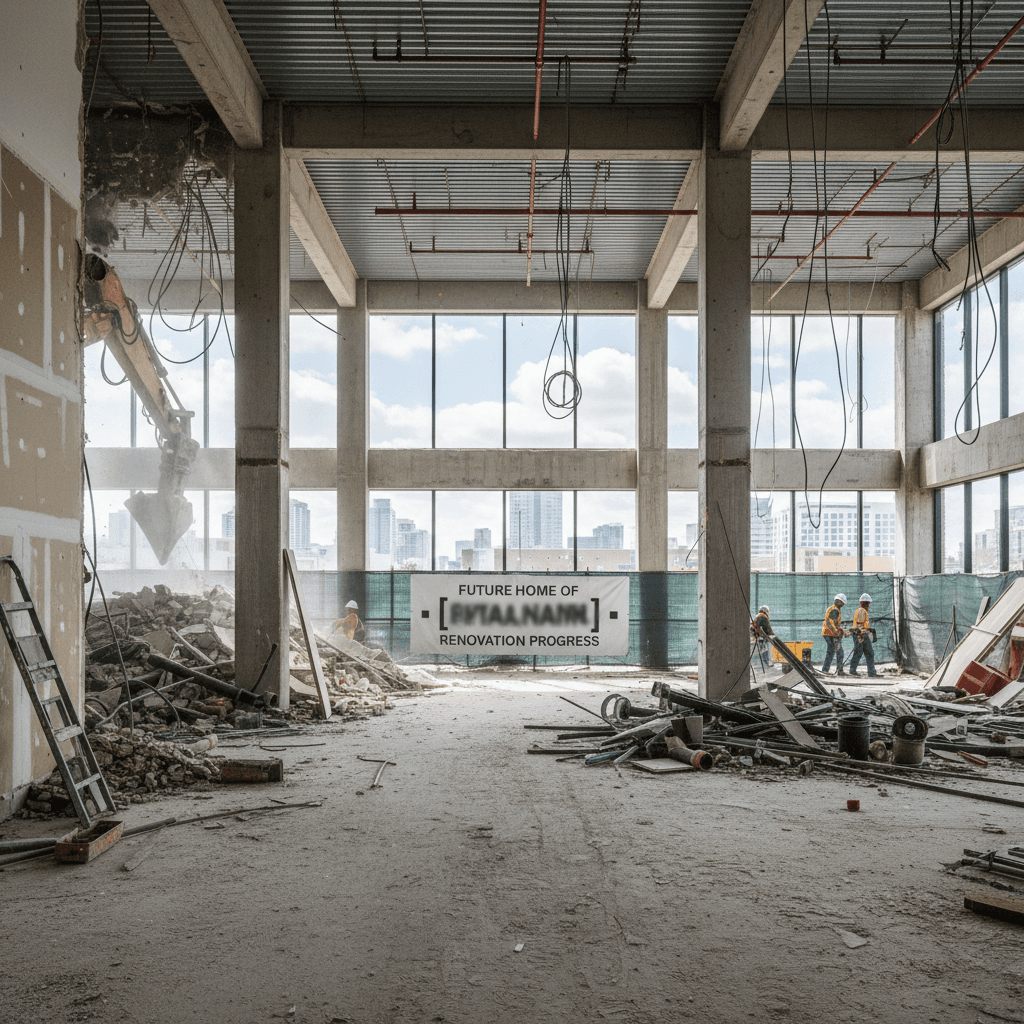
Professional commercial building demolition contractors provide two primary paths for property redevelopment. Total structural removal involves the complete teardown of a building to its foundation, often necessitating specialized commercial concrete demolition to prep the land for new construction. Conversely, selective interior demolition, often called "white box" demo, focuses on stripping a retail or office space back to its core shell. This process preserves the exterior structure while removing all previous tenant improvements, internal partitions, and outdated utilities.
As a local operator, Demo Demo Demo manages the logistics of exterior demolition services while adhering to strict local air quality standards. We integrate construction debris hauling into every phase of the project, ensuring that sites remain clean and compliant with Riverside County regulations. Understanding these local nuances ensures that projects stay on schedule despite the Coachella Valley’s demanding climate and the complexities of desert urban planning.
Average Commercial Demolition Cost Per Square Foot in California
National averages for commercial tear-downs vary widely from $4 to $30 per square foot, yet these broad figures rarely reflect the regulatory realities of the California market. In Southern California, and specifically the Coachella Valley, stringent environmental mandates and higher labor rates push the baseline higher. For most standard commercial structures in our region, project owners should budget between $8 and $15 per square foot for a basic structural removal.
Costs are generally segmented by the depth of the removal required:
Demolition Type | Estimated Cost Per Sq. Ft. (Local Range) | Primary Deliverables |
|---|---|---|
Selective Interior | $4 – $10 | Removal of interior partitions, ceilings, flooring, and MEP systems. |
Structural Only | $8 – $18 | Removal of the building envelope, steel frames, or masonry walls. |
Full Site Clearing | $12 – $30+ | Total structure removal, foundation excavation, and site grading. |
Age is a significant price driver across Riverside County. Older commercial assets in the historical districts of Indio or Palm Springs often utilize legacy construction materials that necessitate specialized handling. Buildings constructed in the mid-20th century frequently feature heavy reinforced concrete or thick masonry, requiring intensive commercial concrete demolition techniques that take longer to execute than modern light-gauge steel or wood frames. Furthermore, older structures are more likely to harbor hazardous materials that require strict abatement protocols before any exterior demolition services can commence.
Final budgets must also account for the logistics of material transit. Efficient construction debris hauling is essential to managing the bottom line, as tipping fees at local landfills are calculated by weight and material type. Professional commercial building demolition contractors evaluate the density of the debris during the bidding phase to ensure the quote reflects the true cost of disposal, particularly when dealing with the high-density rubble common in desert redevelopment projects.
Key Factors That Influence Your Commercial Demolition Budget
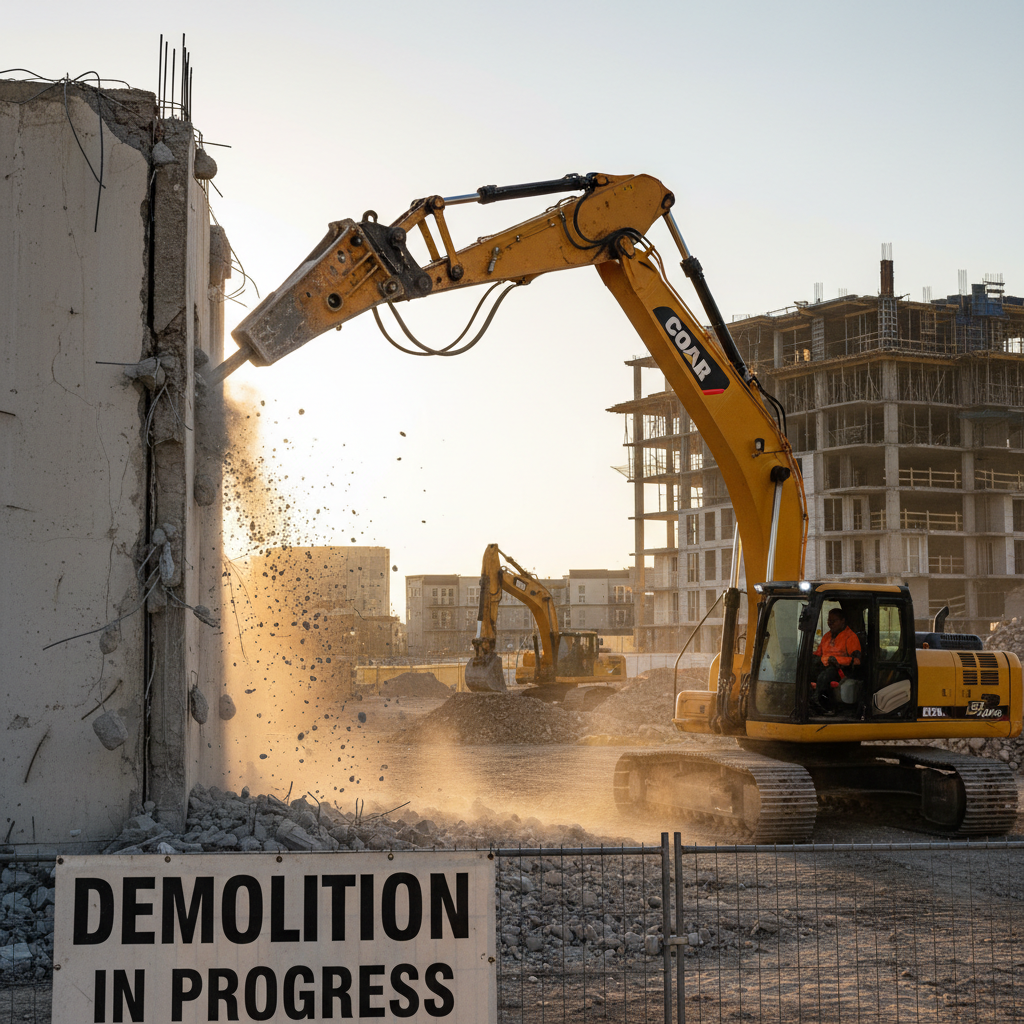
Beyond the square footage, several variables dictate the final price of a project in the Coachella Valley. Experienced commercial building demolition contractors look past the surface to identify logistical and environmental hurdles that can inflate costs if ignored during the bidding phase. Understanding these factors allows for a more accurate financial forecast and prevents unexpected delays during the execution phase.
Key cost drivers include:
Hazardous Material Abatement: California maintains some of the nation's strictest protocols for asbestos, lead-based paint, and PCBs. Many older commercial structures in Palm Desert and Indio require certified abatement before any exterior demolition services can proceed, as disturbing these materials without proper containment is a major legal and safety liability.
Structural Complexity: The building's skeletal system significantly impacts labor and equipment needs. Commercial concrete demolition involving post-tensioned slabs or reinforced masonry walls requires specialized hydraulic attachments and significantly more time than dismantling light-gauge steel or wood frames.
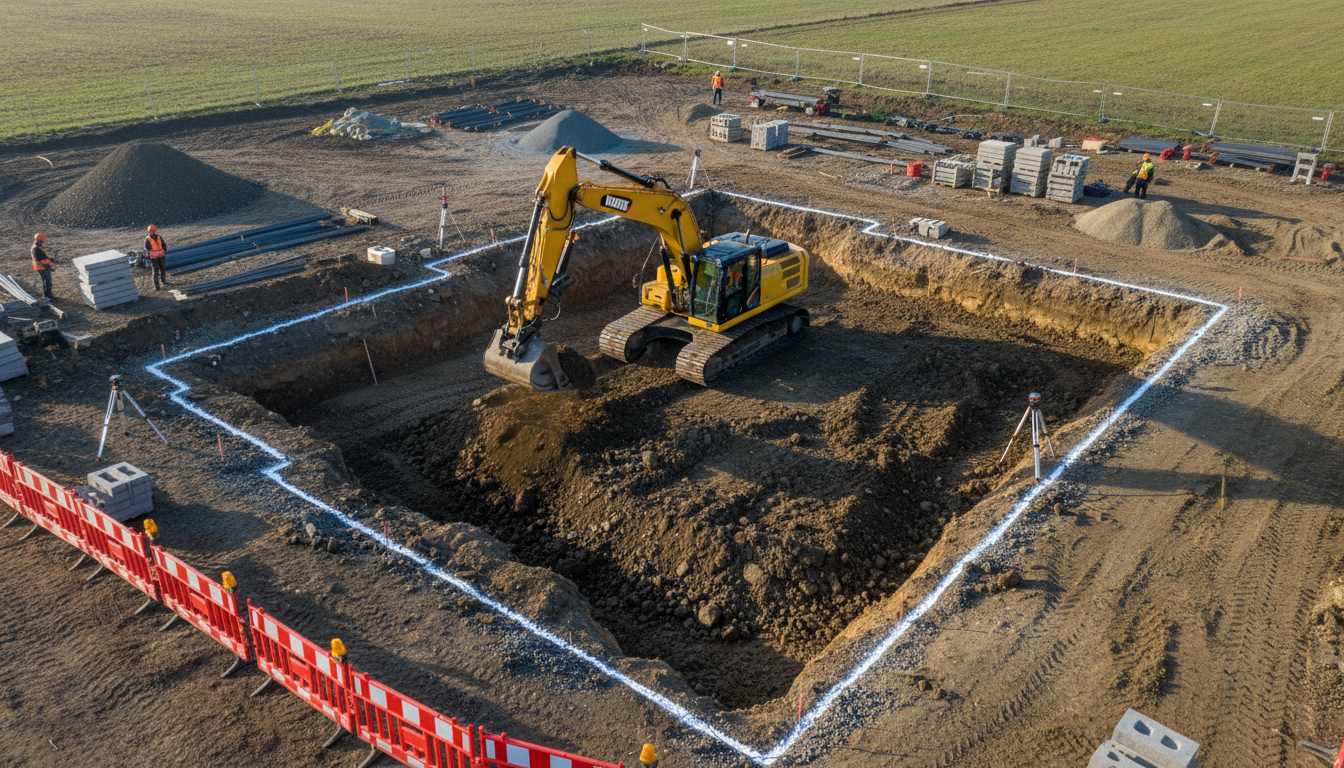
Site Accessibility: Projects located in high-traffic retail corridors or tight urban alleys limit the size of machinery that can be utilized. If a site cannot accommodate a full-size excavator and high-capacity trailers, the project must rely on smaller equipment and more frequent trips, which increases the total man-hours and logistical overhead.
Debris Management and Disposal: Project transparency often hinges on construction debris hauling efficiency. We must calculate the specific distance to Riverside County landfills and specialized recycling centers, as fuel costs and per-ton tipping fees represent a significant portion of the total budget. Mixed waste is consistently more expensive to process than sorted loads of clean concrete or scrap metal.
Early identification of these factors ensures a fixed-price contract that remains stable from the initial site mobilization to the final site sweep.
The Commercial Demolition Process: From Permitting to Site Clearing
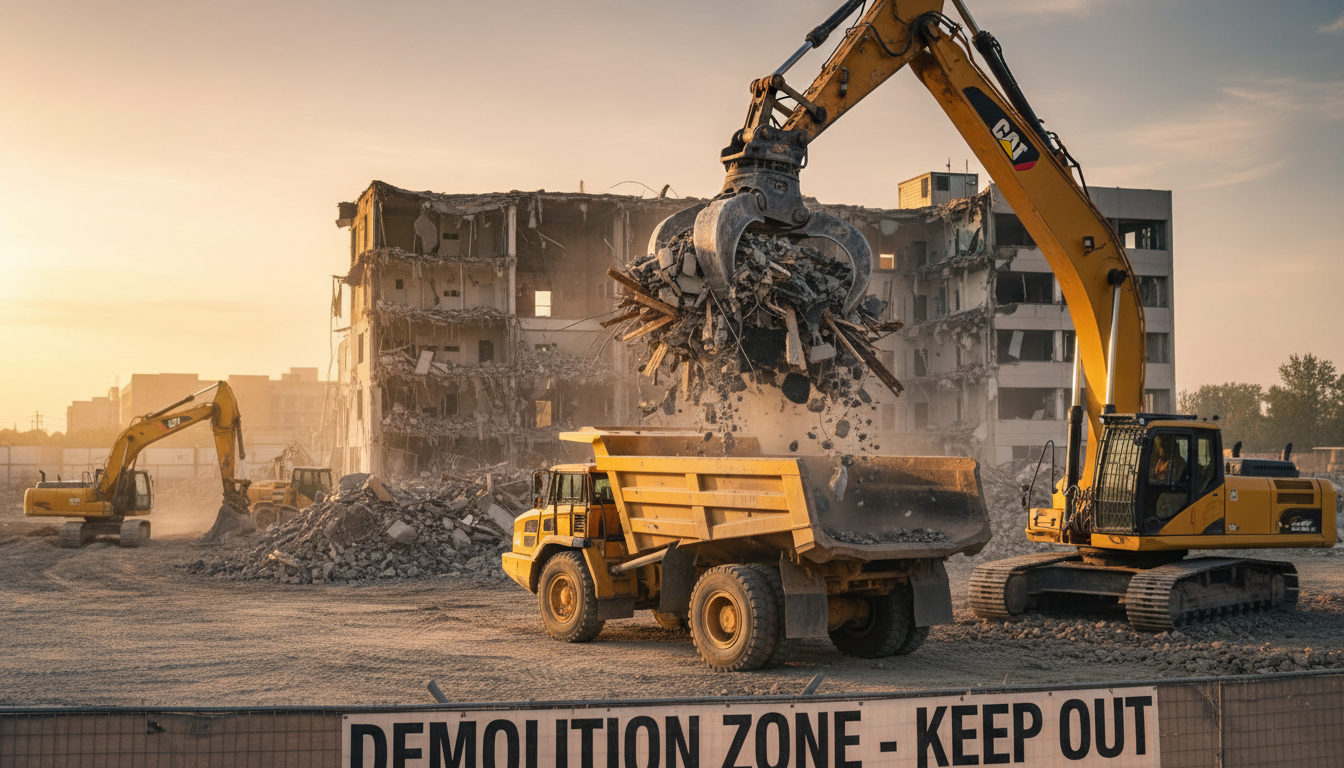
Executing these projects requires a linear, regulated sequence to ensure safety and compliance with Southern California’s rigorous environmental laws. The transition from planning to action begins long before a single excavator arrives on site. Professional commercial building demolition contractors follow a structured five-step process to move a project from a standing structure to a shovel-ready lot.
Pre-Demolition Survey and Hazmat Testing: A comprehensive assessment identifies structural load points and hazardous materials. In California, certified testing for asbestos, lead-based paint, and PCBs is mandatory. This phase ensures that any necessary abatement is completed before the main structure is disturbed.
Permitting and SCAQMD Notification: Securing the correct permits from the City of Palm Desert or Riverside County is only half of the regulatory requirement. A critical local step is filing a 'Notice of Intent' with the South Coast Air Quality Management District (SCAQMD). This filing must occur at least ten working days before activity begins, providing the district with specific plans for dust control and hazardous material handling.
Utility Disconnects and Capping: All active services, including electricity, gas, water, and sewer, must be terminated at the property line. Coordination with local providers is essential to ensure that site activity does not disrupt the municipal grid or cause underground leaks during excavation.
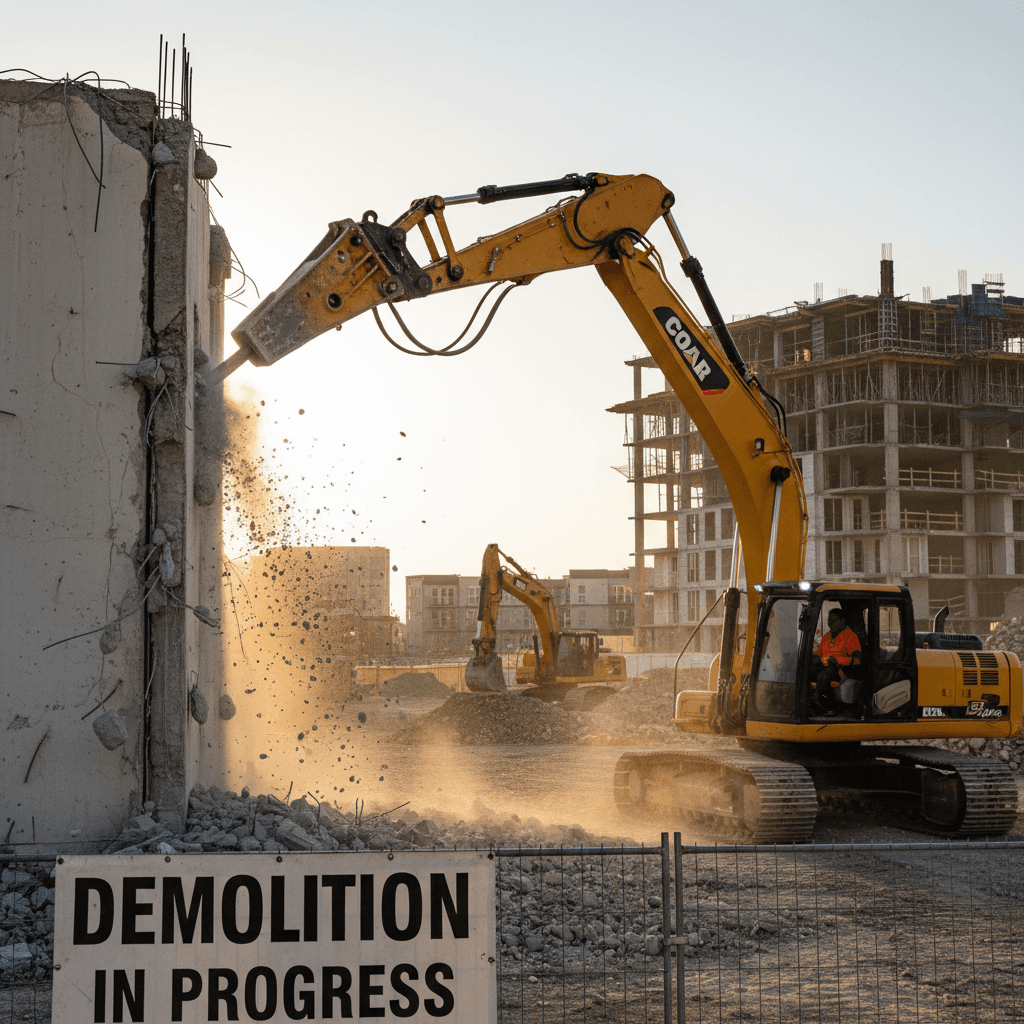
Structural Demolition: The actual removal phase utilizes mechanical or manual methods. High-reach excavators and loaders are used for exterior demolition services, while specialized attachments are brought in for commercial concrete demolition to break up foundations and slabs.
Debris Hauling and Site Recycling: The final step involves systematic construction debris hauling. Material is sorted on-site to separate recyclables like steel and clean concrete from general waste. This reduces the project's environmental footprint and can significantly lower total disposal costs at local landfills through diverted waste credits.
Choosing the Right Commercial Building Demolition Contractors
After the technical phases of permitting and utility capping are set, the outcome of your project depends on selecting the right partner. The Coachella Valley presents distinct logistical challenges, so hiring experienced commercial building demolition contractors requires looking beyond the bottom line of a quote.
Vetting a contractor should begin with three non-negotiables: - C-21 Licensing: In California, a C-21 Building Moving/Demolition contractor's license is mandatory. This ensures the team is specifically insured and bonded for the high-risk nature of structural removal. - Safety Metrics: Request the firm’s Experience Modification Rate (EMR). An EMR below 1.0 indicates a safety record superior to the industry average, which is vital for maintaining low-liability environments on active job sites. - Asset Inventory: Verify they own and maintain the specialized equipment required for your project, such as high-reach excavators for exterior demolition services or hydraulic breakers for heavy commercial concrete demolition.
Local expertise provides a strategic advantage that national firms often lack. A contractor rooted in Palm Desert understands the unique soil compositions of the Coachella Valley, such as the varied compaction needs of sandy alluvial soils during site restoration. Furthermore, established relationships with local municipal inspectors in cities like La Quinta or Indio facilitate smoother inspections and quicker sign-offs.
Finally, ensure the contract includes comprehensive construction debris hauling and site grading. A professional demolition should leave the property completely clear of sub-grade footings and debris, resulting in a shovel-ready lot that is immediately prepared for the next phase of development.
Environmental Compliance and Dust Control in the Desert
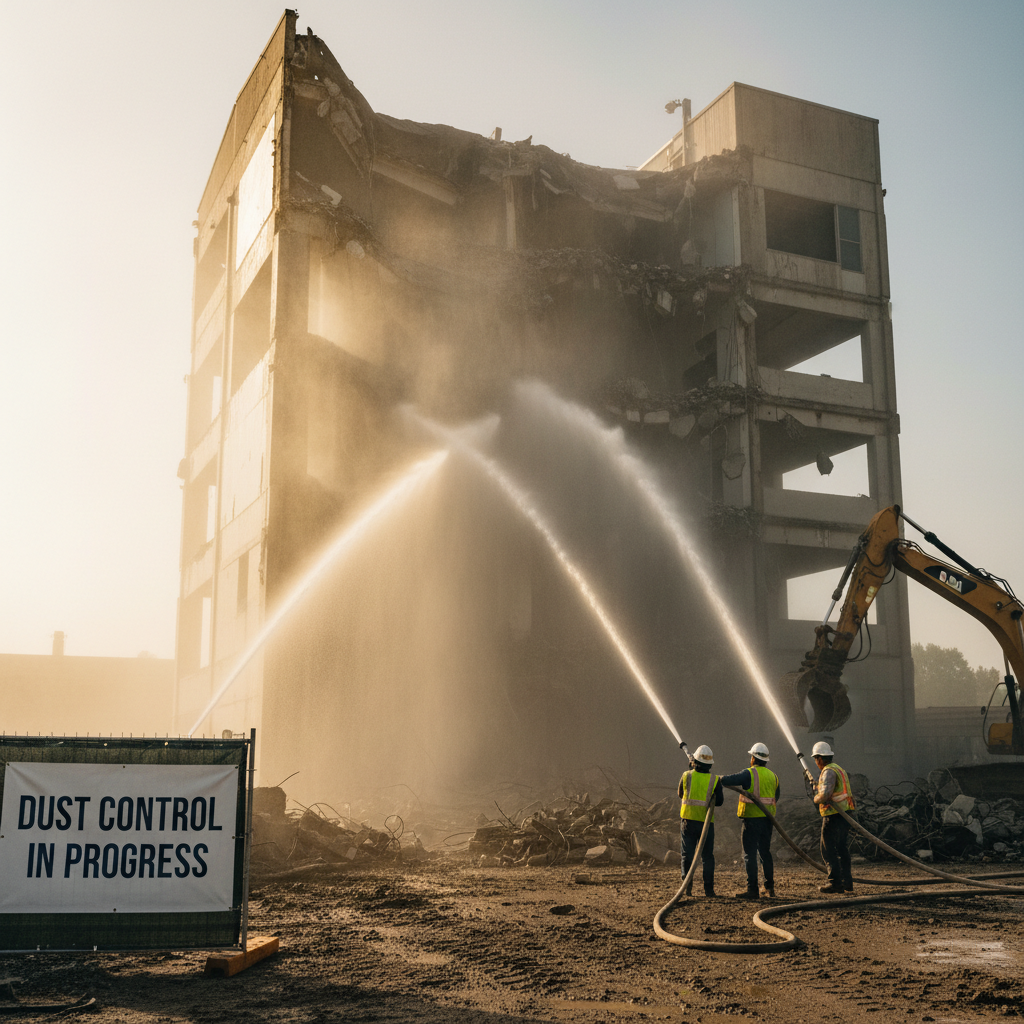
Operating in the Coachella Valley requires strict adherence to the South Coast Air Quality Management District (SCAQMD) Rule 403, which governs fugitive dust. Unlike coastal regions, the desert’s low humidity and frequent wind events mean that dust can migrate quickly across property lines, creating health hazards and legal liabilities. Experienced commercial building demolition contractors integrate dust mitigation into the project budget from day one, rather than treating it as an afterthought.
To maintain compliance, we deploy specialized water trucks and high-pressure misting systems during both exterior demolition services and heavy commercial concrete demolition. This is not just about surface wetting; it requires active moisture management to prevent PM10 particulate matter from becoming airborne. For projects adjacent to active retail centers in Palm Desert or residential communities in La Quinta, we may also utilize wind fencing and soil stabilizers on disturbed areas to ensure the site remains stable after the structural removal is complete.
Effective dust control also extends to the exit points of the job site. We implement track-out prevention measures, such as gravel pads or rumble plates, to ensure that construction debris hauling vehicles do not carry sediment onto public roads. By prioritizing these desert-specific environmental protocols, we protect local air quality and ensure that your project avoids the heavy fines associated with air quality violations.
Navigating the complexities of commercial demolition in the Coachella Valley requires careful planning and a clear understanding of local costs. While the process involves many moving parts, prioritizing safety and compliance ensures your project stays on track. If you want expert help managing these logistical challenges, our team at Demo Demo Demo is ready to assist. You can explore our professional services to see how we streamline the entire planning phase. Let us handle the heavy lifting so you can focus on your next development project.